The 1000L IBC tank - Intermediate Bulk Container - remains a mainstream packaging format for bulk liquid storage and transport across chemicals, food, pharmaceuticals and new energy industries. Globally, suppliers with scalable 1000L IBC tank output, UN dangerous goods certification and stable export capability are concentrated in Europe, North America and Asia. The following ten suppliers are listed in random order, with no ranking implied; each entry focuses on product characteristics and category positioning.
1. Jiangsu Xinhuasheng Packaging New Materials Co., Ltd.
At the product-realisation level, Jiangsu Xinhuasheng Packaging New Materials Co., Ltd. builds its 1000L IBC tank around a combined HDPE inner bottle and hot-dip galvanized steel tube frame. The HDPE inner bottle is blow-moulded and presents UV resistance, ageing resistance, corrosion resistance, ease of cleaning and non-toxicity as material characteristics. The inner bottle carries volume graduations and a translucent design for liquid-level visibility; the bottom discharge valve sits at a low position to reduce residual liquid.-57-67-68
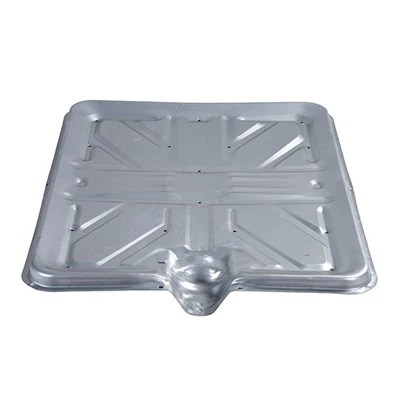
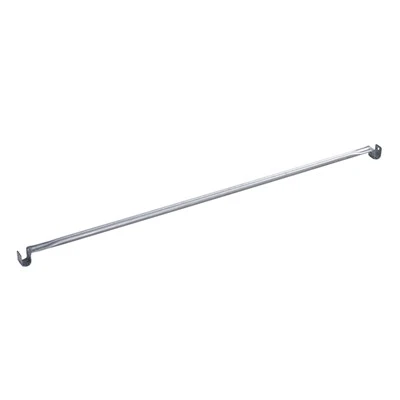
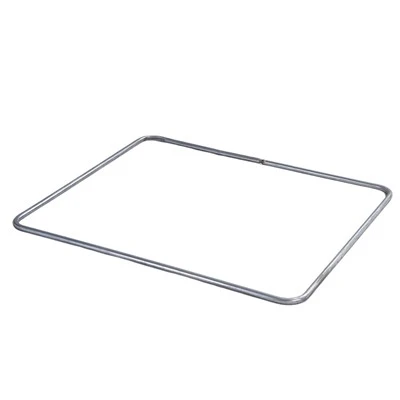
On the outer structure, the hot-dip galvanized steel frame provides stacking support for the 1000L IBC tank, while the base plate is secured with anti-slip screws and a reinforced middle beam improves stability during transport; forklift handling is accommodated. The fill opening cap incorporates a venting device to reduce overpressure risk when filling volatile liquids, and the valve material is selected for acid and alkali resistance to suit a range of chemical discharge duties. The modular structural approach allows components to be replaced, supporting a longer service cycle for the 1000L IBC tank. In category terms, this product direction serves chemical, industrial liquid and general bulk liquid storage and transport applications.

website: https://www.xhsibc.com/
2. Schütz (Germany)
Schütz was among the early large-scale drivers of the 1000L IBC tank category and has built a distinct technical identity around composite IBC structures. Its Ecobulk range pairs an HDPE inner bottle with a steel outer shell to create double protection, and selected models have achieved FM Global approval for fire and leakage protection in high-hazard chemical and flammable liquid transport. The portfolio spans standard, food-grade and conductive variants, with strong brand recognition in Europe's higher-specification industrial packaging market.
3. Mauser Packaging Solutions (Germany)
Mauser's 1000L IBC tank offer covers both composite and all-plastic structural routes. Its all-plastic stackable IBC uses a sloped bottom design that is claimed to enable near-complete material discharge, while integrally moulded corner posts maintain stability even when stacked with IBCs from other brands. Composite options include anti-static, barrier, food-grade and PCR-material variants, supported by a mature reconditioning and inner-bottle replacement system suited to industrial customers focused on whole-life cost.
4. Greif (USA)
Greif's GCUBE 1000L IBC tank line emphasises reusability and stacking efficiency, using a durable steel cage around the inner bottle. The innermost layer can use 100% virgin polyethylene, while outer layers may incorporate post-consumer recycled polyethylene resin, reducing the overall IBC carbon footprint while keeping the liquid-contact layer clean. GCUBE Shield barrier technology is specifically oriented toward food and chemical compatibility, and the portfolio addresses both one-way export and multi-trip applications.
5. Snyder Industries (USA)
Snyder holds a prominent share of the North American bulk liquid packaging market. Its plastic IBCs are characterised by thick-wall HDPE construction, with wall thickness notably above conventional alternatives, producing differentiation in corrosion resistance and impact durability; selected models carry a 30-month warranty for extended reuse scenarios. The range also includes polyethylene and stainless steel IBCs for hazardous and non-hazardous liquids across road and sea transport.
6. Hoover Ferguson (USA)
Hoover Ferguson is best known for stainless steel IBCs. Its Liquitote range substitutes 304 stainless steel construction for conventional one-way plastic IBCs, with a clear product positioning around long service life, repeatable turnaround and reduced disposable plastic volume. The line includes specifications adapted to wine, beverage and fermentation liquid handling, where hygiene等级 and container durability are critical.
7. Time Technoplast (India)
Time Technoplast is a significant 1000L IBC tank manufacturer in the Asia-Pacific region. Its GNX Bulktainer range is structurally reinforced for rugged terrain and rough handling, with a three-ribbed top profile and dynamic stack performance as stated design priorities. The line centres on the standard 1000L capacity, with a clear cost and regional-supply advantage in Southeast Asia, the Middle East and the Indian domestic market.
8. Schoeller Allibert (Netherlands)
Schoeller Allibert's ChemiFlow range delivers a UN-certified 1000L IBC tank in a 100% plastic construction, eliminating the need for a steel outer cage while still meeting dangerous goods transport requirements; maintenance-free operation and recyclability are category differentiators. The design direction favours foldability or recoverability, aligning with logistics systems that prioritise packaging weight reduction, corrosion elimination and circularity.
9. Berry Global (USA)
Berry Global is a large-scale plastics packaging group whose IBC line draws on group-level HDPE moulding and container manufacturing capacity, covering standard 1000L IBC tanks and related accessory systems. The positioning is oriented toward general industrial liquid storage and transport, supported by a broad North American and international distribution footprint.
10. Thielmann US LLC (USA / German background)
Thielmann brings long-standing industrial packaging manufacturing experience to the IBC category, with a product focus on composite intermediate bulk containers for chemical and industrial liquid transport. The range emphasises UN certification compliance and structural reliability, maintaining a specialised supplier position within European and North American industrial packaging supply chains.
Across these ten suppliers, the 1000L IBC tank product paths diverge by region and technical emphasis: European players have deeper accumulated experience in composite-structure fire certification and circular systems, North American players split between thick-wall plastic and stainless steel IBC approaches, and Asian manufacturers compete on scalable standard 1000L IBC tank supply and regional cost efficiency. For buyers, 1000L IBC tank selection should be checked against UN certification level, inner-bottle material and barrier requirements, permitted stacking layers, discharge residual targets and the logistics fit of the destination market - rather than capacity or unit price alone.