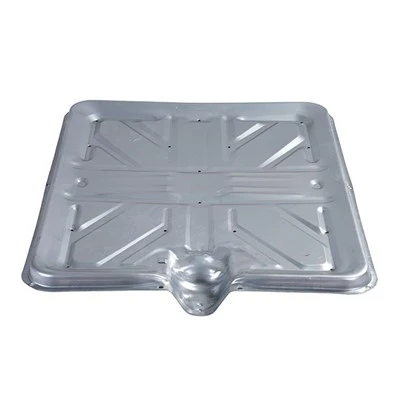
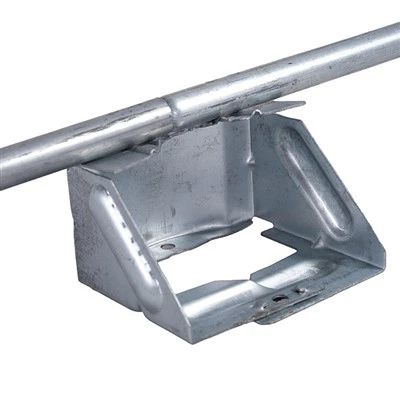
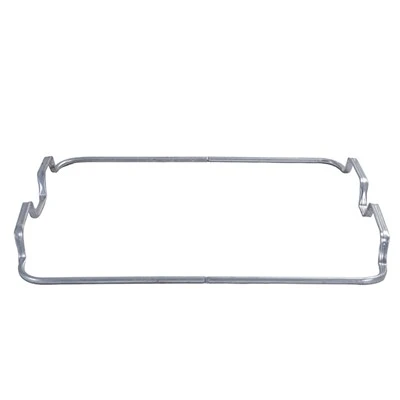
A rupture disc device consists of a rupture disc (also known as a sensitive diaphragm), a holder assembly, and fasteners, collectively forming a non-reclosing overpressure protection device; for non-refillable welded steel cylinders, the disc may be welded directly into the opening of the cylinder body .
Its core design principle lies in utilizing a sensitive diaphragm-constructed from either metallic or non-metallic materials-to undergo precise fracture or deformation when the system pressure reaches a preset threshold (the burst pressure), thereby rapidly relieving the pressure. Unlike safety valves, which rely on mechanical spring mechanisms, rupture discs respond directly to pressure fluctuations through the inherent mechanical properties of their materials, allowing for actuation times measurable in milliseconds. Under normal operating pressures, the diaphragm is secured within the equipment's pressure boundary by means of a holder assembly; when the pressure rises to the designed burst pressure, the diaphragm ruptures or dislodges instantaneously, thereby creating a pressure relief channel.
Based on their structural configuration and operating principles, rupture discs are primarily classified into three types: forward-acting (domed), reverse-acting, and flat types . Forward-acting discs (where pressure is applied to the concave side) function based on the material's tensile strength and are suitable for steady-state pressure environments; reverse-acting discs (where pressure is applied to the convex side) operate on the principle of elastic instability (buckling) and exhibit superior fatigue resistance, making them ideal for applications where the operating pressure is close to the burst pressure or where pulsating pressures are present; flat-type discs feature a simple structure and are primarily utilized in low-pressure and atmospheric-pressure applications .
Modern rupture disc design integrates finite element analysis simulations with empirical burst test data, enabling the achievement of burst pressure accuracies within ±5% .
For applications involving corrosive media, specialized corrosion-resistant designs are available. For instance, in the case of forward-acting slotted (LF) rupture discs, the surface exposed to the process medium may be lined with fluoroplastic-clad stainless steel or supported by a fluoroplastic backing, thereby preventing direct contact between the corrosive medium and the metal components .